
MKE Data Dive

What is MKE Data Dive?
MKE Data Dive was formerly known as Health Data Users Group (HUG). HUG was originally convened to provide a forum for Milwaukee dataphyles to share their knowledge, connect with other like-minded people and use data to improve health in neighborhoods. MKE Data Dive continues in this spirit of sharing data, tools and knowledge in the Milwaukee community and has expanded the scope to include a broader range of topic areas. This evolution of HUG to MKE Data Dive reflects a proactive approach to changing priorities, with the understanding that health is not a separate topic and is fundamental to virtually all conversations about neighborhood data.
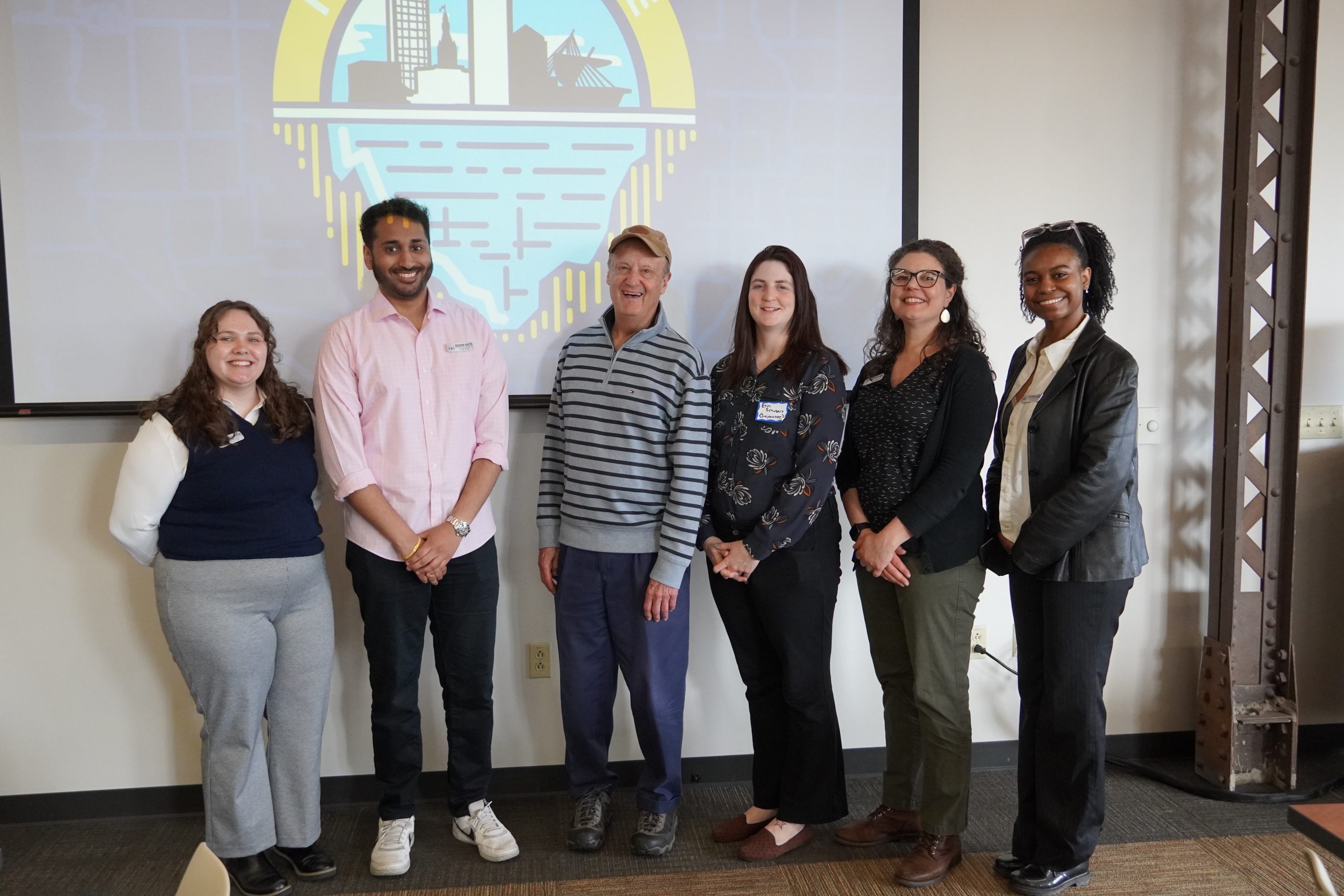
Upcoming MKE Data Dives
MKE Data Dive meetings will take place over lunch at UWM’s Zilber School of Public Health. These meetings are free and open to the public. Any changes or additional information will be confirmed at registration.
Upcoming MKE Data Dive Dates:
Wednesday, August 5th | 12pm-2pm | UW-Milwaukee Zilber College of Public Health
If you are interested in hearing more about MKE Data Dive meetings, please click the link below to sign up to our mailing list or update your preferences.
Reasonable Accommodations
Data You Can Use is committed to providing the highest degree of accessibility when offering agency-sponsored events. Please notify our team at [email protected] with your disability-related accommodation requests by three weeks before the event. We will do our best to honor accommodation requests made after this date.
MKE Data Dive Presenters
Infectious Disease Monitoring in Milwaukee County
The Milwaukee Health Department conducts routine monitoring of many infectious diseases throughout Milwaukee County. This information is publicly available via a new communicable disease data dashboard and soon-to-be-released summary report that reviews the relevant changes in disease trends over time. During this presentation, audience members can expect to learn about both of these tools, how the Health Department uses the data in practice, and how this information is shared with partners across the County to address infectious disease spread.
Cait McCrory, Epidemiologist

City of Milwaukee Health Department
Cait McCrory, MPH (she/her) is an epidemiologist for the City of Milwaukee Health Department (MHD). Cait works with clinical services programs at MHD including infectious disease, laboratory, sexual and reproductive health, breast and cervical cancer screening, and neighborhood nursing. Before Cait was an epidemiologist, she was a Wisconsin Population Health Services Fellow placed at both MHD and the Wisconsin Department of Health Services Immunization Program. In her spare time, you can find Cait at her pottery studio or on one of Milwaukee’s beautiful beaches.
How maps directed flood recovery in Milwaukee County
Following the August 2025 floods, Housing Resources Inc. used data to support recovery efforts by identifying flood-affected households and assessing their needs for mechanical replacements and temporary relocation assistance. By combining GIS mapping, homeowner data, and information from city and county agencies, the team streamlined outreach and improved the efficiency of recovery services. This presentation will demonstrate how data-driven decision-making enhanced disaster response and share practical approaches that can benefit future recovery efforts across the Milwaukee community.
Housing Resources Inc.
Homeownership Preservation Manager
Emmet Gross is a lifelong resident of Milwaukee, Wisconsin. Emmet earned a Bachelor of Science Degree in Architecture and Urban planning from the University of Wisconsin Milwaukee. He has been involved in community development for over 20 years and has worked for Housing Resources, Inc. (HRI) for the past 12 years.
Emmet Gross started at HRI as a Homeownership Specialist. For many years, he educated and counseled homeowners about the responsibilities of homeownership. He was also one of the first in the state to receive certification to provide reverse mortgage counseling for seniors and remains one of only a few with this certification. In addition to his HECM (home equity conversion mortgage) certification, he also maintains certifications from NeighborWorks America® in Pre-Purchase Homeownership Education, Homeownership Counseling, Post Purchase, Foreclosure Prevention and Financial Capabilities.
Emmet’s expertise and training was invaluable as he started at HRI during the recovery of the foreclosure crisis. HRI relied on his experience to help train other post purchase staff and lead the organization’s efforts to help homeowners understand how to protect and keep their homes. Emmet was promoted to Homeownership Preservation Manager in 2020. During the COVID-19 pandemic, the State of Wisconsin rolled out the Wisconsin Help for Homeowners Program. Emmet led HRI’s efforts to help homeowners keep their homes by managing HRI’s 10 staff who were responsible for helping homeowners apply for mortgage, property tax, and utility assistance. In addition to those duties, Emmet oversees HRI’s Post Purchase workshop and counseling efforts.
Because of his wealth of knowledge about the foreclosure prevention and home retention process, he is often asked for input by the state, city, or nonprofit organizations seeking guidance on new initiatives, strategies or programs to be implemented. Emmet serves as the Board Secretary for the Community Insurance Information Center.
Emmett Gross

HUG’s First Meeting
HUG’s introductory session included people from neighborhood groups, the City of Milwaukee Health Department, Zilber School of Public Health, community health clinics, and hospital systems. The founding group established operating guidelines for future meetings, selected a time and location for the first official meeting and decided upon a quarterly meeting schedule. Suggested topics for future HUG gatherings included: women, infants, and children (WIC) data, lead abatement data, and new health data sets. The HUG founders were also interested in inviting speakers who work outside of traditional health fields like safety and urban planning, to reduce data silos.
Presentations to date include:
- Dr. Monique Liston, Founder of UBUNTU Research & Evaluation, and Samantha Reynoso and Kristin Kappelman of Milwaukee Succeeds shared presentations on how community-centered data practices can challenge data violence and drive meaningful systems and policy change. Dr. Liston presented The People’s Data: Ending Data Violence toward Marginalized Communities, while Reynoso and Kappelman presented Centering Community Voice to Influence Systems & Policy.
- The Milwaukee Food Council and the Medical College of Wisconsin (MCW) shared presentations on how data can be used to better understand and address community health and food systems. Lisa Iab Yaj, Food Systems Facilitator for the Milwaukee Food Council, presented Collaborative Storytelling: Mapping Milwaukee’s Food System With Multiplicity, while Jennifer Harris and Jordan Janusiak of MCW presented Exploring the Association Between Structural Racism and Mental Health: Geospatial and Machine Learning Analysis.
- Marissa Meyer, Senior Transportation Planner at the City of Milwaukee, and Alex McMurty, Criminal Analyst at the Milwaukee Police Department, shared presentations about how data can be used to design and implement initiatives to curb reckless driving in Milwaukee. A recording of the HUG meeting can be found here.
- Salma Abadin from Mobilizing Action Toward Community Health presented on Kids Count data from the Annie E. Casey Foundation. An asset-based lens was used to present the data in a new way. Slides from her presentation can be found here and a recording is available here. Maria Beyer from Children’s Health and Dominique Kelsey from Project Ujima shared how pediatric social needs are being assessed in Milwaukee. The slides from their presentation can be found here . A recording of the full HUG meeting can be viewed here.
- Connie Bell from the Wisconsin Department of Health Services shared an overview of new data topics available on the Environmental Public Health Tracking data portal Her full presentation, which includes ideas about how to use the data, is available here. Jess Haven from the Sierra Club Beyond Coal Campaign presented findings from a recent report about energy burden disparities in Milwaukee. The report is available in English and Spanish, and the presentation can be found here. A recording of this virtual meeting is available here
View more
- Matt Drymalksi and Justin Keller from the Milwaukee County Behavioral Health Division provided an overview on how they are using data to identify racial disparities in behavioral health. You can view their slides here and the 2020 3rd Quarter dashboard summary of the Community Access to Recovery Services here. Data You Can Use shared some of the highlights from the Fall 2020 neighborhood Data Chats around underlying health conditions related to COVID-19. View the slide presentation here. The recording of the meeting can be found here.
- Rachel Lecher, Public Health Strategist and Rachel Mukai, Epidemiologist, at the Milwaukee Health Department presented the latest MPH Data brief on COVID-19 showing the impact within the Hispanic/Latinx Community. We also looked at resources that highlight the value of hyperlocal data and Edith Chavez, Organizer at Muskego Way Forward, shared how neighborhood groups are sharing local data with residents. See the recording of the virtual meeting here
- Rachel Mukai, epidemiologist and Michael Stevenson, Public Health Strategist, at the Milwaukee Health Department presented up-to-date local COVID-19 Data and Resources in Milwaukee and shared outreach materials and resources you can use to help residents in your neighborhoods understand, contain and cope with the coronavirus.
- Helen Meier, Assistant Professor at the UWM Zilber School of Public Health, and some of her current students explained how the data, tools, and methods of epidemiology are put to work to keep communities safe in a pandemic.
- Bria Grant Executive Director of Unite MKE and Megan Christenson Epidemiologist at the Wisconsin Division of Public Health presented on Community Assessment for Public Health Emergency Response (CASPER) to Address Extreme Heat Preparedness in Milwaukee, Wisconsin.
- Kris Barnekow Infant Family Specialist and Associate Professor at UWM and David J. Pate, Jr. Department Chair at Helen Bader School of Social Welfare presented on The Experiences of Black Fathers during the prenatal period.
- Sharon Robinson Director of the Department of Administration for the City of Milwaukee is leading the City’s efforts to assure a complete census count in 2020. The census is used to draw legislative boundaries and allocate federal resources to states, counties and cities.
- Lee Valentyn from the Clarke Square Neighborhood Initiative and Jermaine Alexander from Sherman Park Community Association described the work of Reclaiming Our Neighborhoods(RON), a partnership between four organizations in four neighborhoods. Trained residents and volunteers are collecting data on housing conditions and using the data to connect residents to resources and to hold landlords accountable.
- Matt Crespin the associate director of the Children’s Health Alliance discussed using data to drive policy change.
- Kristen Briney, Data services librarian from UW Milwaukee discussed how you can keep your data healthy.
- Peter Eckert and Anna Barnes from the Illinois Public Health Association briefed us on the work of Data Across Sectors for Health and ALL IN- Data for Community Health.
- Mark Huber and David Frazier discussed the Milwaukee Health Care Partnership’s Milwaukee County Health Needs Assessment and the new data set, Health Compass Milwaukee.
- Kori Kenney from the Milwaukee Metropolitan Sewerage District shared information on carnivorous microbes that live in the aeration basins and clean the water.
- Donald Schaewe of the Department of Neighborhood Services discussed rats in Milwaukee ( DNS Rat Presentation) how the City tracks complaints and their connection to public health.
- Sergeant Fadness presented on the Franklin Police Department Special Needs Registry. The registry provides police officers information of high risk individuals and enables them to appropriately address the unique cases in the community.
- Captain Wright presented on the Milwaukee Fire Department’s Community Paramedic Mobile Integrated Healthcare Program. The program has successfully reduced frequent 911 calls for non-emergency situations, which helps ensure more resource is available for an actual crisis.
- Gerardo Mares of the Milwaukee Police Department presented an analysis Domestic Violence in the Amani neighborhood.
- Jennifer Hernandez-Meier and Sarah Kohlbeck from the Medical College of Wisconsin presented on The Cardiff Model and using Electronic Health Records.
- Christy Vogt from Wisconsin Department of Health Services presented on the Wisconsin Environmental Health Tracking data portal, which includes the data they host, how to access and use the portal, and resources for translating data into action.
- Kevin Engstrom of Sixteenth Street Community Health Centers presented on electronic health records to inform programming and measuring long-term health impacts of a major infrastructure project.
- Michael Stevenson and Salma Abadin from the Milwaukee Health Department demonstrated how the Department is using Tableau to create interactive data dashboards which are publicly available.
- Tracy Flood and her colleagues from BroadStreet discussed data from Milwaukee hospital admissions for asthma at the ZIP code level. (MKE Hospital Admissions maps)